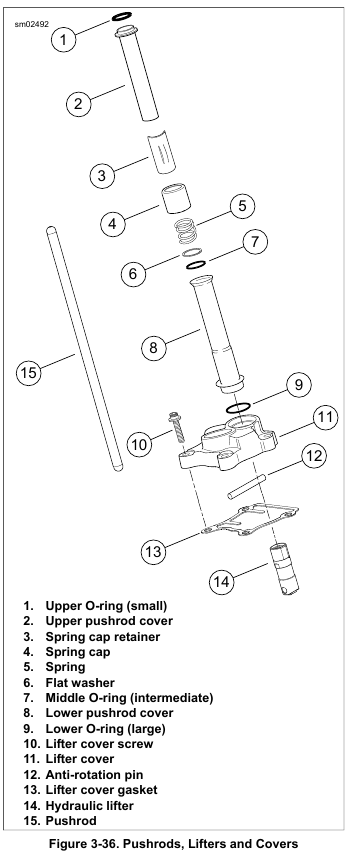
1. See Figure 3-36. Clean old gasket material from the lifter cover (11).
2. With the exception of the hydraulic lifters (14), clean all parts in a non-volatile cleaning solution or solvent. Verify that the O-ring seats and contact surfaces of the pushrod covers (2, 8) are completely clean.
3. Dry parts with low pressure compressed air. Verify that all oil holes are clean and open.
4. Verify that the hydraulic lifter rollers turn freely and are free of flat spots, scuff marks and pitting. If flat spots exist, examine the cam lobe on which the lifter operates.
5. Inspect the lifter socket for signs of wear. Verify that the plunger of the hydraulic lifter is fully extended up against the C-clip. Use index finger to pump plunger to verify lifter
operation.
6. Examine the pushrods (15). Replace any pushrods that are bent, dented, damaged, discolored or if the ball ends show signs of excessive wear or damage.
7. Cover all parts with a clean plastic sheet to protect them from dust and dirt.
Leave a Reply